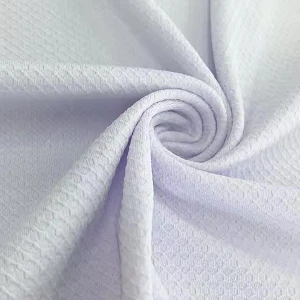
This brings us to the weaving process. Simply put, weaving is the process of weaving a yarn together into a piece of fabric. Although it sounds simple, there are actually a lot of craftsmanship requirements involved.
There are three most common types of weaving, plain, twill and satin. The cloth woven in these three ways has a different feel and appearance.
Plain weaving is the simplest. It's like weaving with horizontal and vertical lines crossing over each other, and the cloth woven is tightly textured and looks flat. This fabric is hard wearing and does not break easily. Many of the shirts we usually wear are woven with a plain weave and are suitable for everyday wear.
Twill weave is somewhat more complicated. It has a diagonal grain, and this cloth is softer to the touch, has a brighter luster than plain weave, and doesn't wrinkle as easily. Twill also has good elasticity, so it is often used to make suits. Suits need to be stiff and comfortable, and twill meets this need.
Satin weaving is the most complicated process. The surface of satin fabric is particularly smooth and just looks shiny. This is because most of the yarn is on the surface when satin weaving is done, so it is smooth to the touch. This kind of cloth is suitable for high-end clothes, such as gowns and wedding dresses.
In addition to these three common weaves, there are some special processes, like jacquard and printing processes. Jacquard can make all kinds of complicated patterns, such as animal patterns, geometric patterns and so on. It is like using different colors and lines to get together on the cloth to make the fabric look good.
Different knitting processes give the fabric a nice looking pattern texture and function. Plain fabrics are strong and durable, twill fabrics are soft and stretchy, and satin fabrics are premium. Only by recognizing these weaving processes can we better help us choose the fabrics we want.